
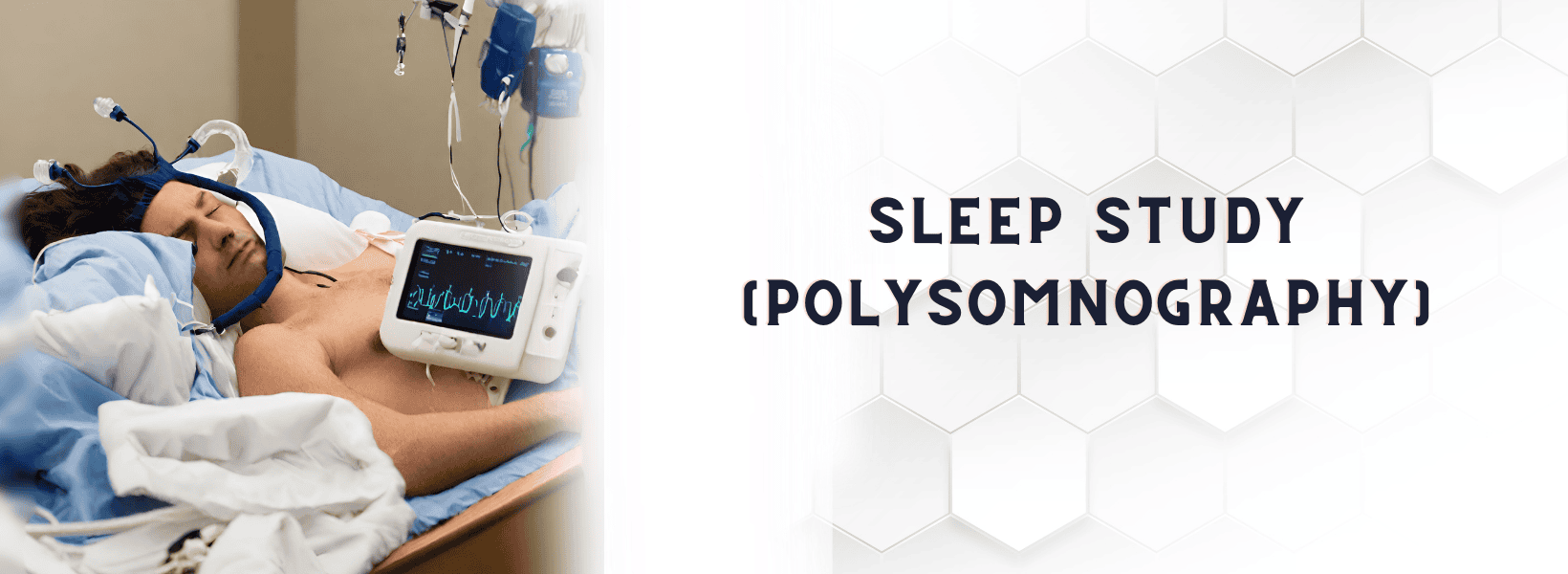
Sleep Study (Polysomnography)
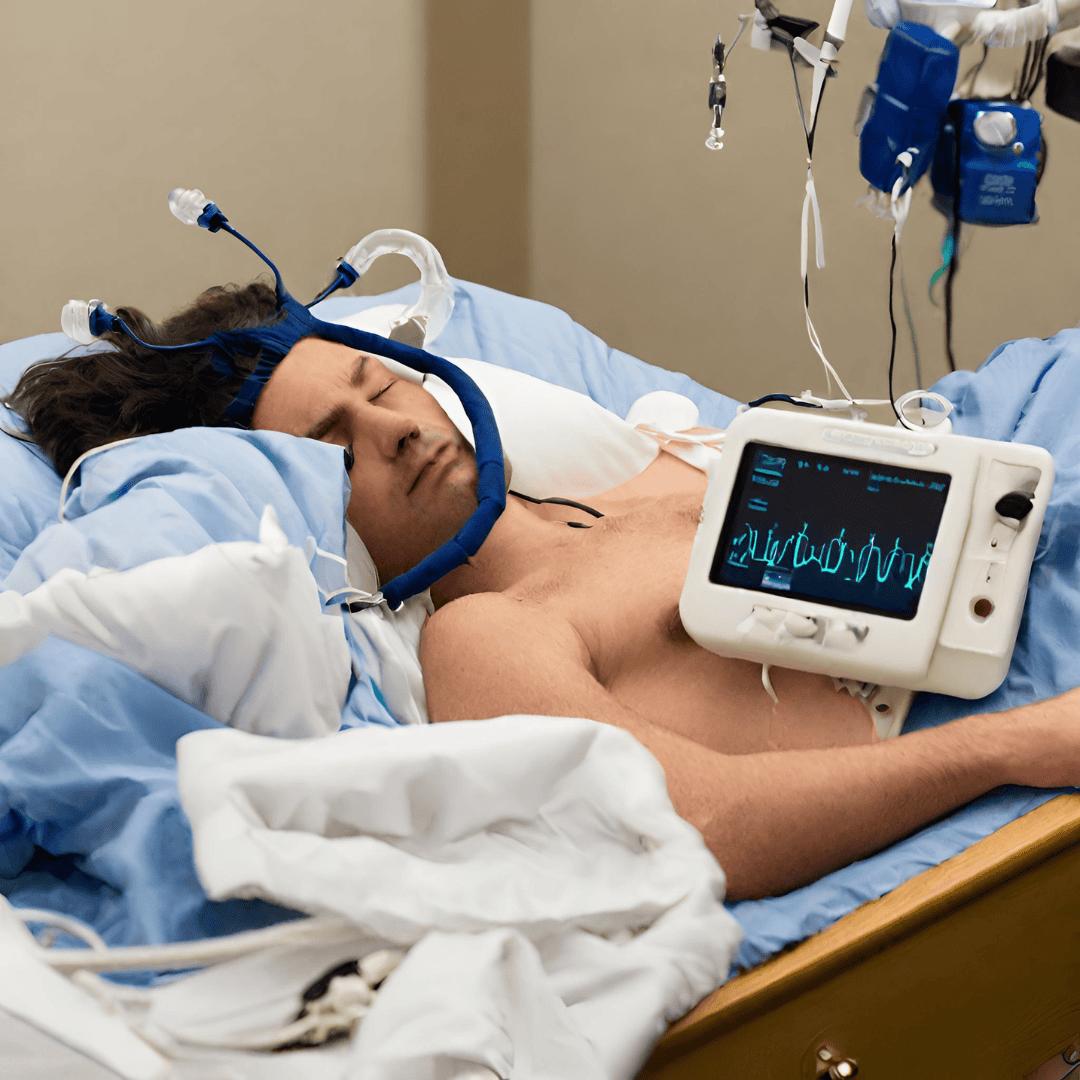
A sleep study, also known as polysomnography (PSG), is a comprehensive diagnostic test used to evaluate and monitor various physiological factors during sleep. This study helps healthcare professionals assess and diagnose sleep disorders by recording data on brain activity, eye movements, heart rate, respiratory effort, airflow, and other parameters.
Here's an overview of what typically happens during a sleep study
1. Preparation: Before the sleep study, patients usually spend some time at the sleep center or facility where the study will take place. Technicians will attach sensors and electrodes to different parts of the body to monitor various physiological functions. These sensors may include electrodes on the scalp to measure brain activity (electroencephalogram or EEG), sensors near the eyes to record eye movements (electrooculogram or EOG), and sensors on the chin to monitor muscle activity.
2. Respiratory Monitoring: Straps and belts are used to measure the chest and abdominal movements, providing information about respiratory effort. Nasal airflow and oxygen levels in the blood may also be monitored.
3. Cardiac Monitoring:Electrodes are attached to the chest to monitor heart rate and rhythm (electrocardiogram or ECG).
4. Leg Movement Monitoring: Sensors may be placed on the legs to monitor limb movements, helping to identify conditions like periodic limb movement disorder.
5. Audio and Video Monitoring: Some sleep studies include audio and video monitoring to document sleep behaviors and identify any potential sleep disturbances.
6. Sleep Stages Recording: The sleep study records different sleep stages, including rapid eye movement (REM) sleep and non-REM sleep, based on the patterns of brain activity and eye movements.
7. Data Collection:Throughout the night, the sleep study equipment collects and records data from the various sensors. This data is then analyzed by sleep technologists or sleep specialists.
8. Morning Review:After the study is complete, patients may be awakened, and the collected data is reviewed. The patient's sleep patterns, stages, and any potential abnormalities are assessed.
Sleep studies are commonly used to diagnose a variety of sleep disorders, including
Obstructive Sleep Apnea (OSA): Characterized by repeated pauses in breathing during sleep.
Narcolepsy: Involves sudden and uncontrollable episodes of falling asleep during the day.
Insomnia: Difficulty falling asleep or staying asleep.
Restless Legs Syndrome (RLS): Involves uncomfortable sensations in the legs and an urge to move them, often disrupting sleep.
Parasomnias: Abnormal behaviors during sleep, such as sleepwalking or night terrors.
The results of a sleep study provide valuable information for healthcare professionals to tailor appropriate treatment plans for individuals experiencing sleep-related issues.