
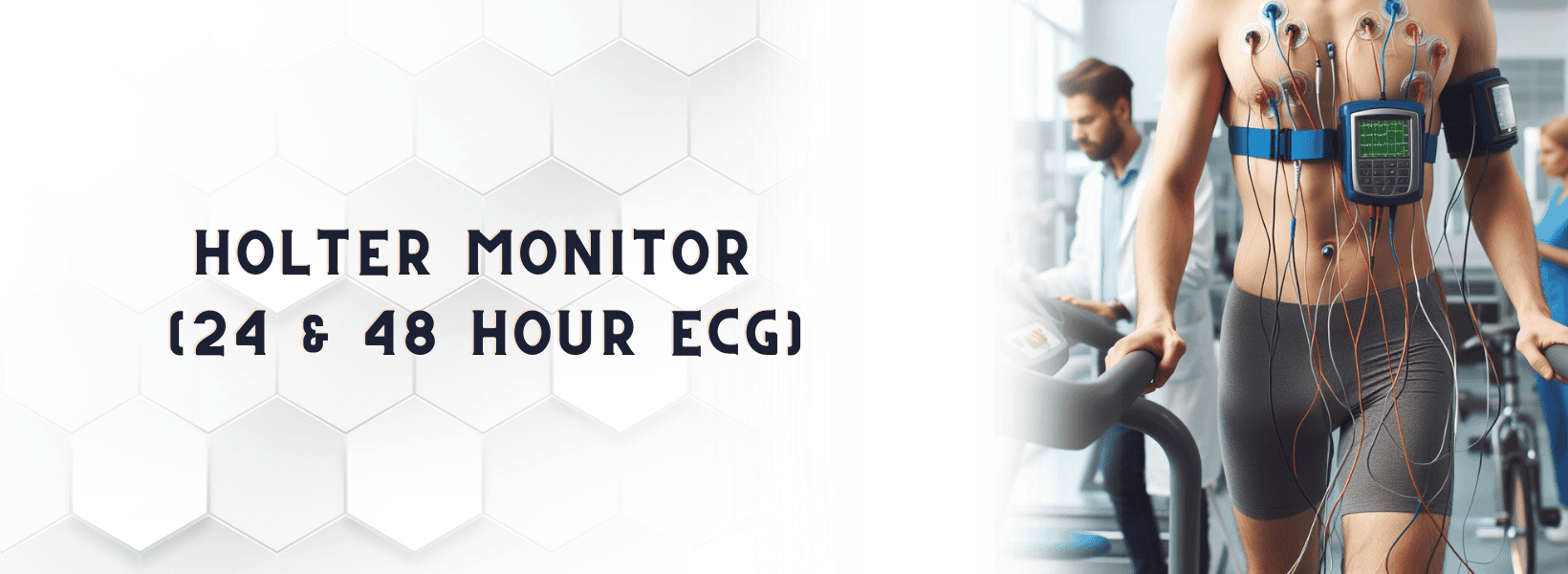
Holter Monitor (24 & 48 Hour ECG)
A Holter monitor, also known as a 24-hour or 48-hour electrocardiogram (ECG or EKG), is a portable device used to continuously record the electrical activity of the heart over an extended period, typically a day or two. This monitoring allows healthcare professionals to assess the heart's rhythm and detect any irregularities or abnormalities that may not be captured during a standard short-duration ECG.
Here's an overview of how a Holter monitor works and its purpose
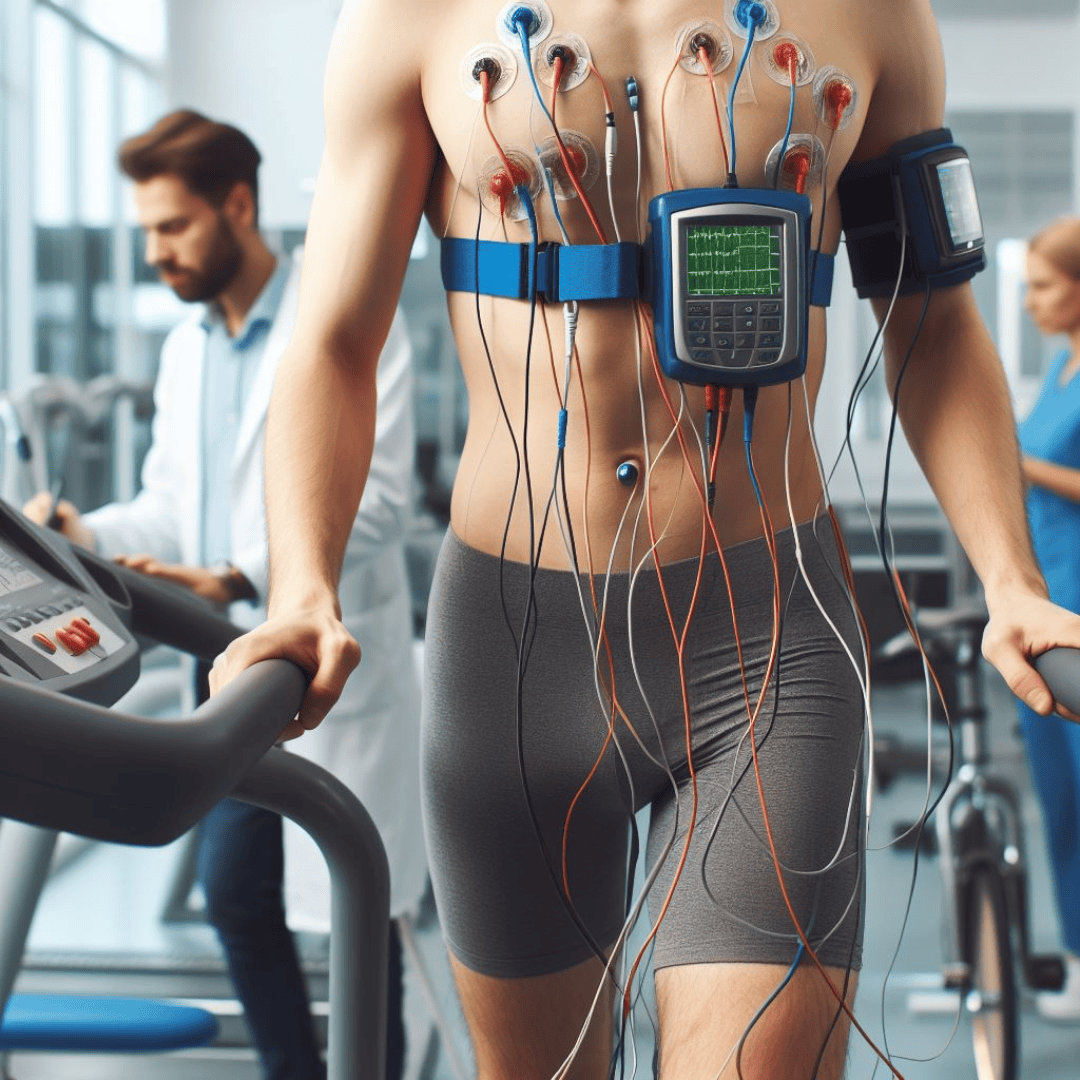
1. Device Setup: The Holter monitor is a small, lightweight device that is worn by the patient throughout the monitoring period. It consists of electrodes, which are attached to the patient's chest, and a recorder, which is usually worn around the waist or carried in a pocket.
2. Continuous ECG Recording: The electrodes are connected to the patient's skin, and they continuously record the electrical signals generated by the heart. The recorder stores this information over the entire monitoring period.
3. Normal Daily Activities: Patients are encouraged to go about their normal daily activities while wearing the Holter monitor. This allows healthcare professionals to observe the heart's activity during various physical activities, periods of rest, and sleep.
4. Event Button: Patients may be provided with a button to press when they experience symptoms such as palpitations, dizziness, or chest pain. This helps to correlate any symptoms with specific changes in the ECG recording.
5. Data Analysis: After the monitoring period, the recorded data is analyzed by healthcare professionals, including cardiologists or technicians. They review the ECG tracings to identify any irregularities, abnormal heart rhythms, or episodes of concern.
Holter monitoring is commonly used for the following purposes
Detection of Arrhythmias: Holter monitors are effective in identifying irregular heart rhythms, including atrial fibrillation, ventricular tachycardia, and other types of arrhythmias.
Assessment of Symptoms: If a patient experiences symptoms such as palpitations, lightheadedness, or chest pain, a Holter monitor can help determine if these symptoms are related to abnormal heart rhythms.
Evaluation of Treatment Efficacy: In some cases, Holter monitoring may be used to assess the effectiveness of certain medications or interventions in managing heart rhythm disorders.
Holter monitoring is a non-invasive and valuable tool in cardiology for diagnosing and managing various cardiac conditions. It provides a more extended and comprehensive view of the heart's electrical activity, aiding in the identification of rhythm abnormalities that may occur intermittently or during specific activities.