
Angioplasty
Angioplasty is a medical procedure commonly used to treat narrow or blocked blood vessels, typically arteries. The goal of angioplasty is to improve blood flow by widening the narrowed or obstructed vessel. This procedure is often performed in the context of coronary artery disease but can also be applied to other arteries in the body.
Here's an overview of the angioplasty procedure
1. Diagnosis: Angioplasty is usually recommended after the identification of a significant blockage or narrowing in an artery through diagnostic procedures like angiography or other imaging techniques.
2. Preparation: The patient is typically prepared by administering local anesthesia and sometimes a mild sedative. In some cases, the patient may remain awake during the procedure.
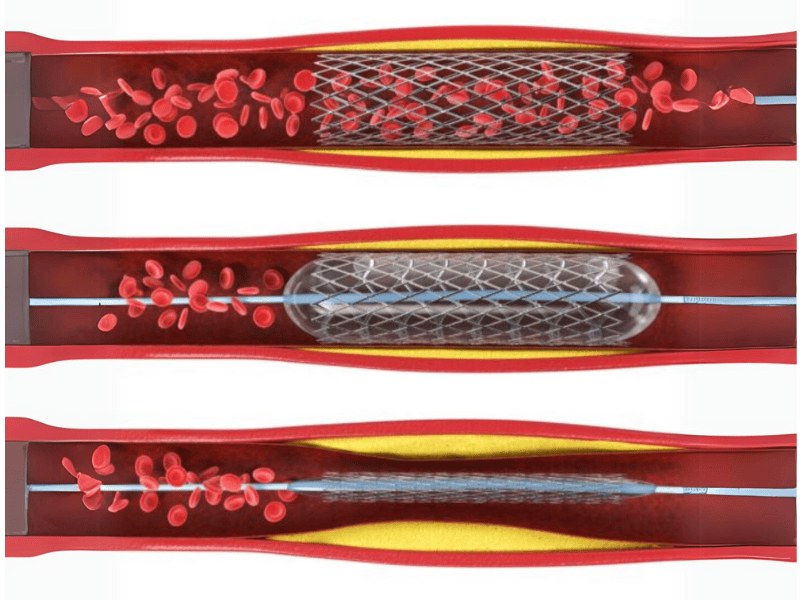
3. Catheter Insertion:A thin, flexible tube called a catheter is inserted into the blood vessel through a small incision, usually in the groin or wrist. The catheter is then threaded through the blood vessels until it reaches the site of the blockage.
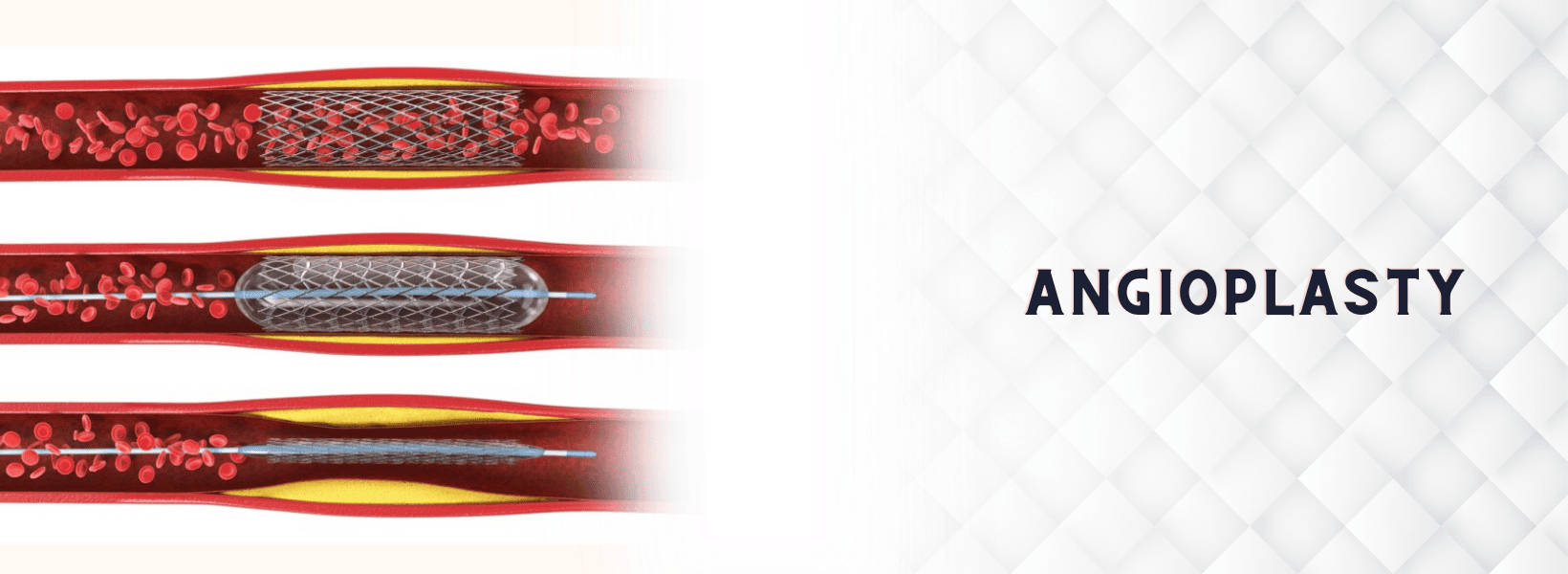
4. Balloon Inflation: Once the catheter is in place, a deflated balloon at its tip is positioned at the site of the blockage. The balloon is then inflated, compressing the plaque or fatty deposits against the artery walls and widening the vessel.
5. Stent Placement (Optional): In many cases, a small metal mesh tube called a stent is inserted along with the balloon. The stent expands with the balloon, acting as a scaffold to keep the vessel open after the balloon is deflated and removed. This helps prevent the artery from collapsing or narrowing again.
6. Balloon Deflation and Catheter Removal: After the balloon has been inflated and the stent placed (if used), both are deflated, and the catheter is removed. The blood vessel remains widened, allowing for improved blood flow.
7. Recovery and Monitoring: The patient is monitored for a period after the procedure to ensure there are no complications. In many cases, patients can resume normal activities relatively quickly compared to traditional surgery.
Angioplasty is commonly used to treat coronary artery disease
where it is referred to as percutaneous coronary intervention (PCI) or coronary angioplasty. It is also employed in peripheral artery disease (PAD) and other conditions where blood vessels are narrowed or blocked. Angioplasty is a less invasive alternative to traditional surgical approaches, and its effectiveness often depends on factors such as the location and severity of the blockage, as well as the overall health of the patient.